The Best Low Cost Fuel for Industrial Boilers (2026 Guide)
Running an industrial boiler is a capital-intensive operation. Whether you manage a textile mill, a food processing plant, or a heavy manufacturing facility, fuel expenses consistently eat up the largest portion of your operating budget.
Because traditional fossil fuels are becoming more expensive and subject to strict environmental regulations, facility managers are under immense pressure to find a better way to generate steam.
If you are searching for a reliable, low cost fuel for industrial boilers that will not degrade your machinery or trigger environmental fines, this guide breaks down everything you need to know about optimizing your energy overhead.
Quick Answer
The most reliable and cost-effective boiler fuel today is biomass briquettes. Made by compressing agricultural residues (such as rice husks, sawdust, and crop stalks) into dense logs, they provide a high Gross Calorific Value (3,800–4,800 kcal/kg) at a fraction of the cost of furnace oil or diesel. Unlike raw coal, premium briquettes produce minimal ash (5–15%) and almost zero sulfur emissions, drastically cutting down long-term boiler maintenance and ash disposal costs.
Why "Cheap" Fuel Doesn't Always Mean Low Steam Generation Costs
When evaluating fuel options, the upfront price per ton is only part of the equation. Buying the cheapest raw material often leads to skyrocketing operational expenses down the line.
Your true steam generation costs depend on how effectively a fuel transfers heat to water. If you purchase a cheap fuel with high moisture content or a low calorific value (GCV), you have to burn significantly more of it just to maintain boiler pressure.
Furthermore, low-quality fuels generate heavy smoke and massive amounts of toxic waste. The hidden fees associated with frequent boiler tube cleaning, machinery downtime, and high ash disposal costs quickly erase any savings you made on the initial purchase. A genuinely cost-effective fuel must balance a reasonable purchase price with high thermal output and low maintenance requirements.
Comparing Traditional vs. Alternative Fuel for Boilers
To understand why modern industries are making a shift, let’s compare the most common boiler fuels available today:
Furnace Oil & Diesel (The Expensive Route)
While liquid fuels provide excellent heat and are relatively easy to handle, they have become financially unsustainable for most daily operations. The volatile global market and heavy taxation mean that relying on oil severely cuts into profit margins.
Traditional Coal (The Hidden Cost Trap)
Coal has historically been the go-to fuel because it is cheap to buy and burns hot. However, coal is a logistical nightmare. It produces massive amounts of harmful sulfur dioxide emissions and thick, corrosive ash. The wear and tear on boiler grates and the heavy fines associated with environmental non-compliance make coal a risky long-term investment.
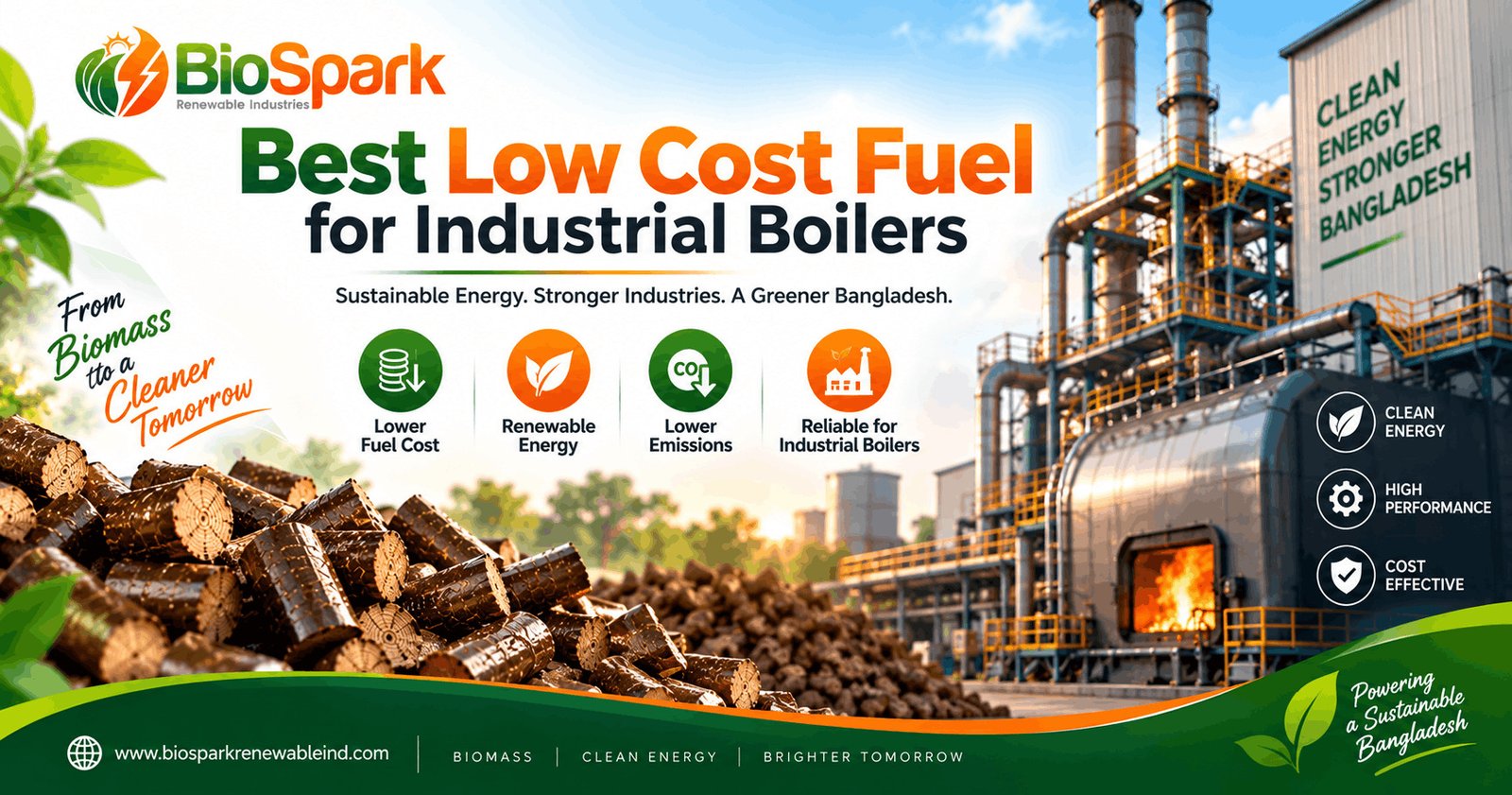
Biomass Briquettes (The Optimal Balance)Best Low Cost Fuel for Industrial Boilers
Currently, biomass briquettes for industrial boilers represent the ideal middle ground. Made by aggressively compressing agricultural waste (like sawdust, rice husks, and straw), they offer a steady, predictable burn. They are the best alternative fuel for boilers because they provide the robust heat of coal without the toxic byproducts or volatile price fluctuations.
4 Reasons Biomass Briquettes Are the Best Cost-Effective Boiler Fuel
If you want to achieve significant fuel consumption reduction and stabilize your energy budget, switching to high-density biomass briquettes is a strategic move. Here is why they outshine traditional options:
- Exceptional Heat Output: Premium briquettes boast a Gross Calorific Value (GCV) ranging from 3,800 to 4,800 kcal/kg. This high energy density translates to rapid, efficient steam generation.
- Boosted Boiler Thermal Efficiency: Because good briquettes have less than 10% moisture, your boiler doesn’t waste energy evaporating water. All the heat goes directly into producing steam.
- Minimal Maintenance: High-quality briquettes produce very little ash (often between 5% and 15%). This practically eliminates clinker formation on the boiler grate, extending the lifespan of your equipment and drastically reducing cleaning downtime.
- Achieving Sustainability Goals: Biomass is a carbon-neutral, clean industrial energy source. Utilizing it helps facilities meet strict international compliance standards, making your manufacturing processes highly attractive to eco-conscious global brands.
How to Ensure Your Briquettes Deliver Maximum Efficiency
Not all briquettes are manufactured equally. If you transition to biomass, the quality of the briquette dictates your success.
You must source fuel that has been properly dried and compressed without chemical binders. Poorly compressed briquettes will crumble into dust during transport, leading to feed blockages and uneven burning. To ensure you are buying the right product, check out our comprehensive guide on How to Choose the Best Biomass Briquette for Boiler Operations, which breaks down the specific technical parameters you need to look for in a supplier.
The Impact on South Asian Manufacturing (Focus on Bangladesh)
For industries operating in regions like Bangladesh, finding a reliable, localized energy source is critical. The ready-made garment (RMG) and textile sectors require immense amounts of steam, and relying on imported coal creates supply chain vulnerabilities.
Fortunately, Bangladesh generates a vast amount of agricultural residue year-round. Forward-thinking suppliers are collecting this localized waste and transforming it into premium briquettes. By adopting this best fuel for industrial boilers, local factories secure a stable, low-cost energy supply while simultaneously boosting the rural economy and meeting the green compliance standards demanded by Western clothing retailers.
Conclusion
Reducing your factory’s energy overhead requires looking beyond the initial price tag of fuel. By focusing on thermal efficiency, maintenance reduction, and environmental compliance, it becomes clear that biomass briquettes are the smartest financial choice. They offer the consistent heat needed for heavy industry while protecting your bottom line from the hidden costs of dirty fossil fuels.
Ready to Lower Your Operating Costs?
If you are tired of unpredictable fuel prices and high maintenance bills, it is time to upgrade your energy strategy. Contact BioSpark Renewable Industries today to request a fuel cost comparison and discover how our premium biomass briquettes can streamline your boiler operations.
Frequently Asked Questions (FAQs)
1. What is the most cost-effective boiler fuel available right now?
When factoring in thermal output, maintenance, and ash disposal, biomass briquettes are currently the most cost-effective fuel for industrial steam generation, offering a lower operational cost per kilogram of steam compared to coal or oil.
2. Can I use biomass briquettes in a boiler designed for coal?
Yes. Most solid-fuel industrial boilers that run on coal can transition to burning biomass briquettes with zero to minimal modifications to the feeding system or grate.
3. Do biomass briquettes burn as hot as traditional coal?
While top-tier coal may have a slightly higher peak calorific value, premium biomass briquettes (3,800 – 4,800 kcal/kg) provide more than enough sustained thermal energy to run heavy industrial steam boilers efficiently.
4. How much ash do biomass briquettes actually leave behind?
High-quality, well-processed biomass briquettes leave behind very little residue, typically ranging from 5% to 15% ash content, which is significantly lower and much easier to dispose of than coal ash.
5. Are biomass briquettes safe to store in large quantities?
Yes, they are very safe to store. Because they are highly compressed and have very low moisture, they are less prone to spontaneous combustion compared to loose agricultural waste or certain types of coal, provided they are kept in a dry, covered area.