
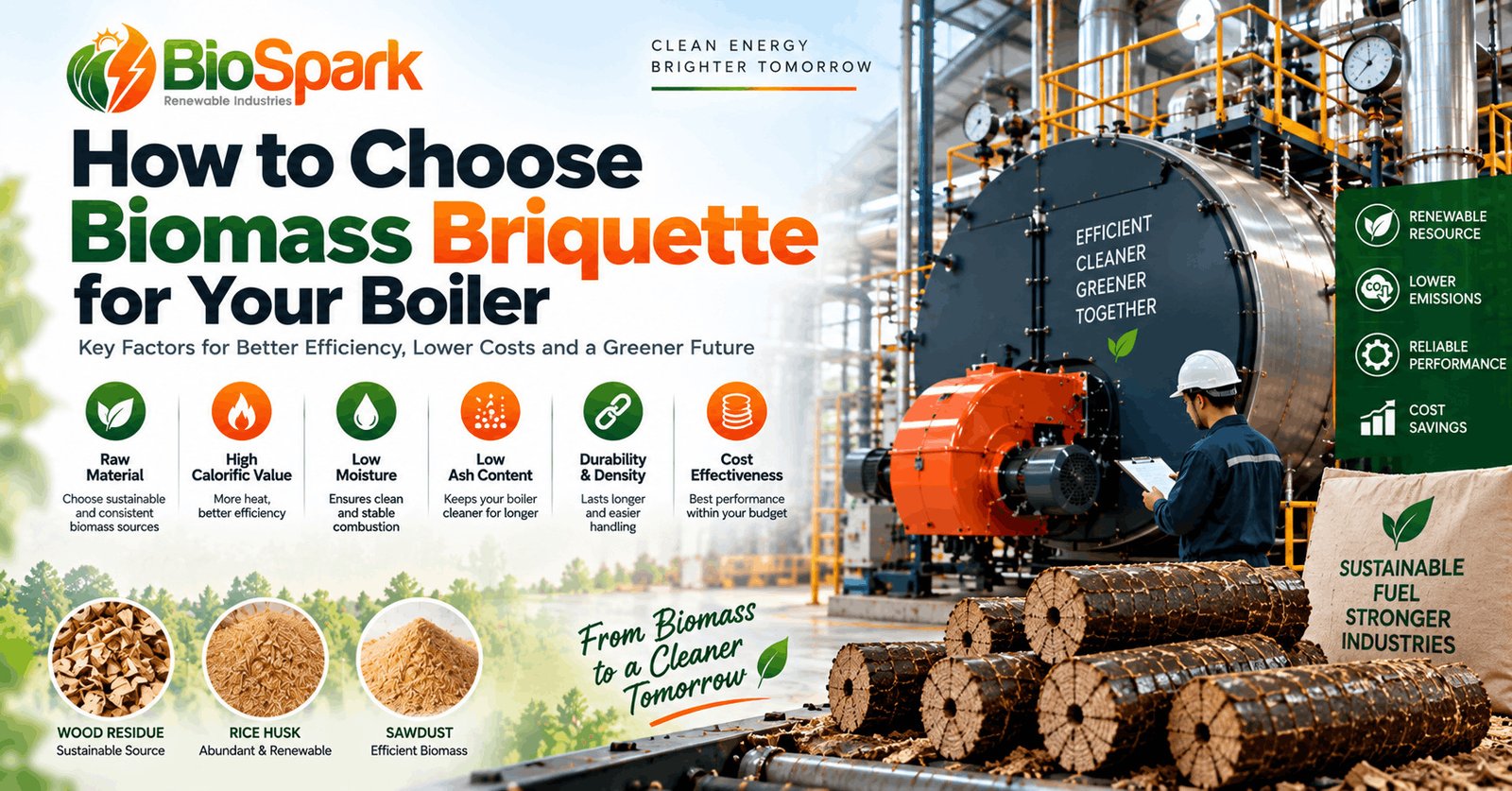
How to Choose the Right Biomass Briquette for Boiler Operations
Switching your factory to renewable energy is a brilliant financial and environmental move. However, simply deciding to use green fuel is only the first step. To keep your factory running smoothly, you must know how to select the exact right fuel for your specific machinery.
If you are sourcing a biomass briquette for boiler use, you cannot afford to just buy the cheapest option on the market. Purchasing low-quality, poorly manufactured fuel will lead to heavy smoke, clogged machinery, and frequent production shutdowns.
Here is exactly how to evaluate, test, and choose the perfect biomass fuel to keep your steam generation high and your maintenance costs low.
Quick Answer
To choose the best biomass briquette for boiler operations, you must check four critical technical specifications:
High Calorific Value (GCV): Look for an energy output between 3,800 and 4,800 kcal/kg.
Low Moisture: Ensure the moisture content is strictly under 10%.
Low Ash Content: Keep it below 15% to prevent boiler damage and clinker formation.
High Density: The briquette must be heavily compressed (>1000 kg/m³) so it does not crumble into dust during transport.
Why Not All Biomass Briquettes Are Created Equal
Briquettes might look similar from the outside, but they behave very differently inside a 500-degree boiler furnace.
The quality of a briquette is determined by two main things: the raw agricultural waste used to make it (like rice husks, sawdust, or mustard stalks) and the mechanical pressure applied by the manufacturing machine. If a supplier uses low-grade machinery or mixes in dirt and sand to increase the weight of their product, your boiler will be the one that suffers the consequences
4 Technical Specifications to Check Before Buying
When speaking with a supplier, always ask for their product’s technical data sheet or lab test results. Here are the numbers you need to verify:
1. Gross Calorific Value (GCV)
This is the most important metric. GCV measures how much heat energy is released when the briquette burns.
What to look for: A GCV between 3,800 and 4,800 kcal/kg.
Why it matters: Higher heat means you burn fewer briquettes to produce the same amount of steam.
2. Moisture Content
Water is the ultimate enemy of fire. If briquettes are not properly dried before compression, they trap moisture inside.
What to look for: Moisture content strictly below 10%.
Why it matters: If moisture is high, your boiler wastes valuable energy just drying the briquette out before it can actually burn. High moisture also causes thick, black smoke and drops your steam pressure.
3. Ash Content
Ash is the unburnable material left behind after combustion.
What to look for: Ash content below 15%.
Why it matters: Heavy ash requires your maintenance team to shut down the boiler frequently for cleaning. Even worse, at high temperatures, excess ash melts into hard, glass-like rocks called “clinkers.” These clinkers stick to your boiler grate, block air circulation, and can permanently damage the metal.
4. Density and Mechanical Durability
A good briquette is heavily compressed without the use of chemical glues.
What to look for: A bulk density greater than 1,000 kg/m³.
Why it matters: Your fuel has to survive being loaded onto trucks, dumped in your storage yard, and pushed through mechanical conveyors. If the briquette is too soft, it will turn into loose dust before it ever reaches the fire. Dust burns far too quickly and can choke your boiler’s airflow.
How to Test Briquette Quality Yourself (The Field Tests)
If you don’t have immediate access to a laboratory, you can perform two quick physical tests at your factory when a sample arrives:
The Drop Test: Hold the briquette at chest height and drop it onto a hard concrete floor. A high-quality, dense briquette might chip slightly, but it should remain mostly intact. If it shatters into pieces or crumbles into a pile of dust, the compression quality is too low.
The Visual and Touch Test: A premium briquette should have a smooth, slightly shiny outer surface (caused by natural lignin melting under high pressure). If it looks overly flaky or feels soft in your hands, avoid it.
The Importance of a Reliable Supplier
Even if a supplier provides a great initial sample, the real test is consistency. Can they provide that exact same quality during the rainy season? Can they deliver steady volumes when agricultural harvest seasons change?
Always partner with an established manufacturer who uses standardized raw materials and maintains strict internal quality control year-round.
Conclusion
Choosing the right biomass briquette for boiler use requires looking past the price tag and focusing on fuel efficiency. By enforcing strict standards for calorific value, moisture, ash, and density, you protect your expensive boiler equipment from unnecessary wear and tear. Ultimately, investing a little time into selecting a premium fuel source will reward your factory with lower steam costs, zero unexpected downtime, and effortless environmental compliance.
Ready to Upgrade Your Boiler Fuel?
Stop guessing with your factory’s energy supply. Contact BioSpark Renewable Industries today for high-density, lab-tested biomass briquettes. Let us provide a sample and show you how much you can save on your next production run.
Frequently Asked Questions (FAQs)
1. What is the ideal GCV for a biomass briquette?
For industrial steam generation, a Gross Calorific Value (GCV) between 3,800 and 4,800 kcal/kg is ideal. This range provides the intense, sustained heat required for heavy machinery.
2. Why is my boiler smoking so much when I burn biomass?
Excessive smoke is almost always caused by high moisture content in the fuel. If your briquettes contain more than 10% to 12% water, they will smolder and produce heavy smoke instead of burning cleanly.
3. Can a traditional coal boiler run on biomass briquettes?
Yes! Most solid-fuel industrial boilers designed for coal can easily transition to burning biomass briquettes. In most cases, no major modifications to the boiler grate or feeding system are required.
4. How do I know if a briquette has high mechanical density?
You can perform a simple drop test from waist or chest height onto a hard surface. If the briquette survives the impact without shattering into dust, it has high mechanical density and will survive transport and automated feeding.
5. What happens if the ash content of my briquette is too high?
High ash content leads to frequent boiler shutdowns for cleaning. Furthermore, high ash often contains silica, which melts at high temperatures and forms hard clinkers that block airflow and permanently damage boiler grates.