
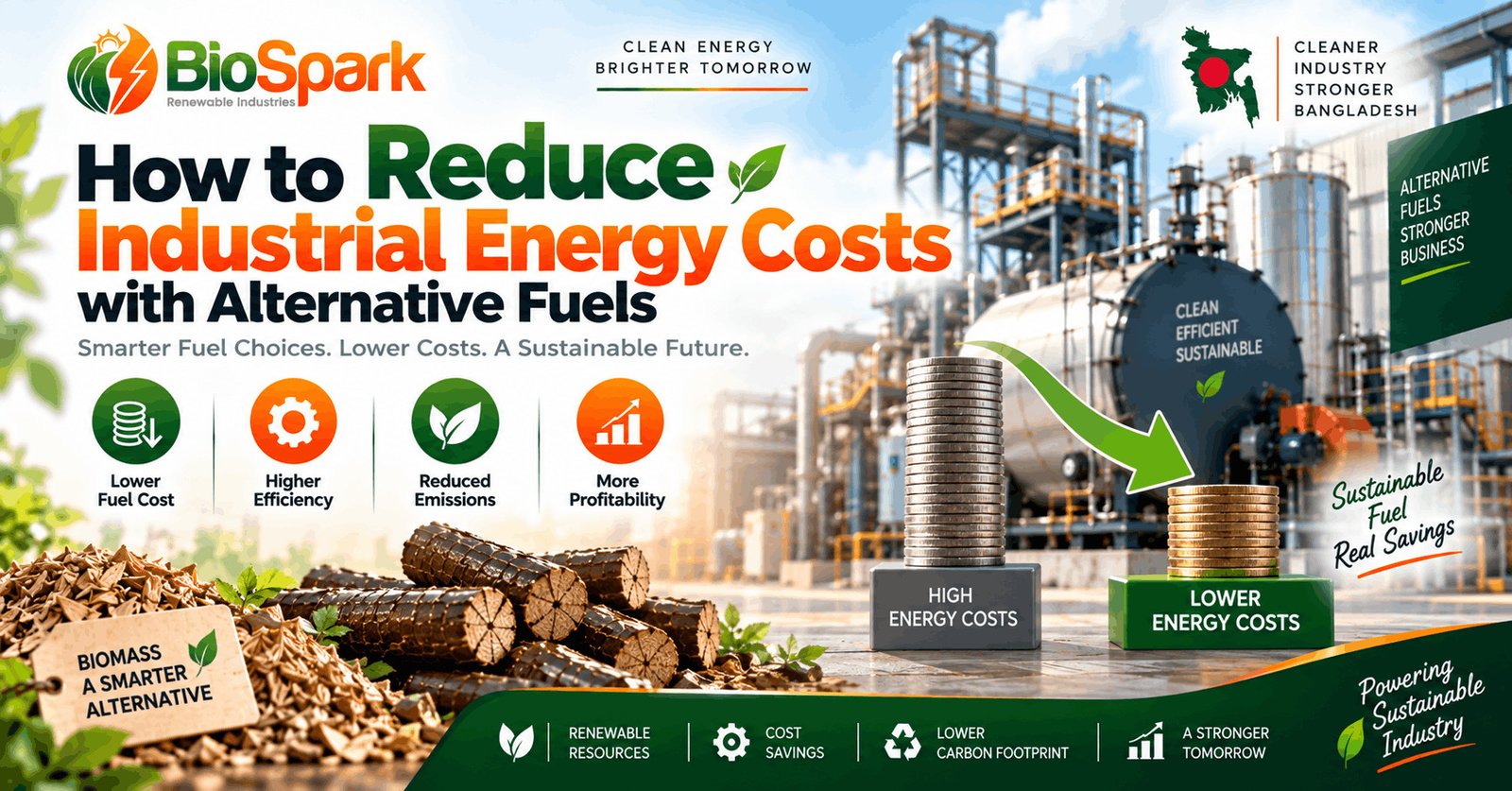
How to Reduce Industrial Energy Costs with Alternative Fuels
Energy is consistently one of the highest ongoing expenditures on any factory’s balance sheet. For operations running heavy thermal equipment—such as textile dye houses, chemical processors, paper mills, and food manufacturing plants—steam generation and furnace heating can swallow up to 50% or more of monthly operational budgets.
Compounding this problem is the ongoing volatility of fossil fuel markets. Spiking oil prices, unstable natural gas pipeline pressures, and rising taxes on high-emission fuels like coal make relying on legacy energy sources an expensive gamble.
If your goal is to sustainably reduce industrial energy costs without sacrificing output or damaging your machinery, shifting toward modern alternative fuels is the most reliable strategy available. Here is an actionable guide to cutting thermal energy overhead while keeping operations completely reliable.
Quick Answer
The most direct way to reduce industrial energy costs is to replace high-cost fossil fuels (such as diesel, heavy furnace oil, and imported coal) with high-density alternative fuels, particularly biomass briquettes. Engineered from agricultural and industrial byproducts, quality biomass fuels offer a dependable calorific value (3,800–4,800 kcal/kg) at a fraction of the unit cost. Factory operators routinely lower daily steam production expenses by 30% to 40%, reduce boiler tube fouling, eliminate toxic sulfur emissions, and protect production lines from foreign currency supply shocks.
Where Does Your Industrial Energy Budget Really Go?
To slash your energy expenses, you must look at how thermal energy behaves inside your utility system:
- Fuel Consumption vs. Steam Generation: The efficiency of your boiler defines your cost per ton of steam. Inefficient fuels require your burners to consume far more raw material just to maintain system pressure.
- Thermal Losses: High-moisture fuels waste significant thermal energy simply boiling off trapped water before actual heat transfer occurs.
- Maintenance Downtime: Dirty fuels create soot, slag, and heavy ash buildup. Every hour spent shutting down a boiler to scrape grates or clean flue tubes is lost production time that inflates your overall energy bill.
Reducing energy costs requires selecting a fuel that produces clean, consistent heat while keeping your maintenance cycles to an absolute minimum.
The Financial Pitfalls of Legacy Fossil Fuels
Sticking with traditional energy sources creates ongoing financial leaks across your enterprise: reduce industrial energy costs
1. Heavy Furnace Oil and Diesel
Liquid fuels provide reliable, intense heat, but their operating expenses are staggering. Unpredictable international price spikes and supply interruptions make long-term financial forecasting nearly impossible for oil-fired plants.
2. Industrial Coal
While coal often appears inexpensive by initial weight, it comes with expensive hidden liabilities: heavy clinker formation on boiler grates, extensive ash handling fees, corrosive sulfur byproducts that eat away at steel tubes, and costly emissions penalties.
3. Grid Natural Gas
While clean-burning, pipeline gas is prone to severe pressure drops in high-density industrial corridors. When gas pressure drops below operational thresholds, factories are forced to switch to expensive backup diesel generators or halt production altogether.
Top Alternative Fuels That Cut Industrial Energy Overhead
Pivoting to alternative fuels allows industrial facilities to regain control over their utility spending: reduce industrial energy costs
1. High-Density Biomass Briquettes (The Top Performer)
Manufactured by compressing organic residues (such as sawmill dust, rice husks, and agricultural stalks) under extreme mechanical pressure, biomass briquettes are the premier choice for solid-fuel boilers.
- Cost Impact: Cuts steam generation costs by 30% to 40% compared to heavy fuel oil.
- Performance: High calorific value (up to 4,800 kcal/kg) with minimal moisture (under 10%) ensures immediate, high-efficiency heat transfer.
2. Waste Heat Recovery Systems (Thermal Recycling)
Capturing waste heat from exhaust stacks and flue gases to preheat boiler feedwater significantly reduces the total fuel required to produce saturated steam. Combining waste heat recovery with alternative solid fuels creates a compounding cost-saving effect.
3. Solar Thermal Pre-Heating
Installing industrial solar thermal collectors allows sunlight to pre-heat boiler feedwater before it enters the primary boiler vessel. While solar cannot independently maintain continuous 24/7 industrial steam pressures, it acts as an effective secondary booster that permanently reduces baseline fuel consumption.
4 Steps to Transition Your Boiler and Maximize Savings
Transitioning your factory to an alternative fuel does not require an overhaul of your facility:
- Conduct a Baseline Fuel Audit: Calculate your current Specific Steam Consumption (SSC)—the exact cost required to generate one metric ton of steam under your current fuel regime.
- Verify Boiler Compatibility: If you run a solid-fuel boiler (like a chain-grate or fluidized-bed unit), transitioning to biomass briquettes requires zero to minimal mechanical modifications, mainly involving airflow calibration.
- Source Lab-Tested Fuels: Never settle for low-density or unstandardized waste. Insist on fuels with certified low moisture (<10%) and low ash (<15%) to avoid slagging and tube fouling.
- Optimize Air-to-Fuel Ratios: Fine-tune your forced-draft (FD) and induced-draft (ID) fans to match the combustion properties of your alternative fuel, maximizing thermal output and eliminating unburned carbon losses.
The Dual Benefit: Lower Bills and Stronger Buyer Compliance
Switching to alternative fuels does more than trim your operating expenses. For export-driven enterprises, such as garment and textile mills, decarbonization is now a key commercial requirement.
International brands and regulatory bodies reward manufacturing plants that actively phase out high-carbon fuels. Transitioning to renewable biomass fuels elevates your factory’s environmental ratings—such as Higg FEM and LEED certifications—giving you a decisive edge when competing for high-value international contracts.
Conclusion
Continuing to burn costly, volatile fossil fuels is an unnecessary drain on your factory’s operating capital. The most effective way to reduce industrial energy costs is to leverage high-performance alternative fuels that burn cleanly, deliver reliable thermal output, and stabilize your supply chain.
By replacing expensive imported fuels with densified biomass briquettes and optimizing your boiler parameters, you protect your machinery, cut your steam production expenses, and secure a resilient, cost-efficient future for your enterprise.
Ready to Reduce Your Industrial Energy Costs?
Stop overpaying for your daily steam generation. Contact BioSpark Renewable Industries
today for a comprehensive boiler energy audit. Our technical team will evaluate your thermal load, calculate your exact monthly fuel savings, and deliver premium, lab-certified biomass briquette samples directly to your plant.
Frequently Asked Questions (FAQs)
1. How much can a factory save by switching to alternative fuels?
Most manufacturing plants save between 30% and 40% on their direct thermal energy expenses when transitioning from furnace oil or diesel to high-density biomass briquettes, while also substantially lowering equipment maintenance and ash disposal costs.
2. What is the fastest way to reduce industrial energy costs in a steam-heavy plant?
The fastest, most impactful step is fuel switching. Replacing an expensive, imported primary fuel with a locally produced, high-GCV alternative fuel (like biomass briquettes) delivers immediate cost reductions without requiring major mechanical retrofits to existing solid-fuel boiler systems.
3. Can existing industrial boilers handle alternative fuels without major upgrades?
Yes. Solid-fuel boilers designed for coal or wood can easily transition to biomass briquettes with minimal modifications. In most instances, the plant operator only needs to adjust the forced-draft fan settings and fuel feed rates to optimize combustion.
4. How do alternative fuels impact boiler maintenance and downtime?
High-quality alternative fuels like biomass briquettes produce substantially less abrasive ash (5% to 15%) compared to low-grade industrial coal (which often contains 25% to 40% ash). This drastically reduces clinker formation, protects refractory walls, prevents boiler tube corrosion, and cuts maintenance downtime.
5. Are alternative fuels recognized by international sustainability audits?
Yes. Biomass fuels derived from sustainably collected agricultural and forestry residues are globally recognized as carbon-neutral, renewable energy sources. Using them helps factories achieve high scores in sustainability frameworks like the Higg Index (Higg FEM) and ISO 50001 energy management certifications.